
The Nobel Prize in Chemistry and the precision required in medicine
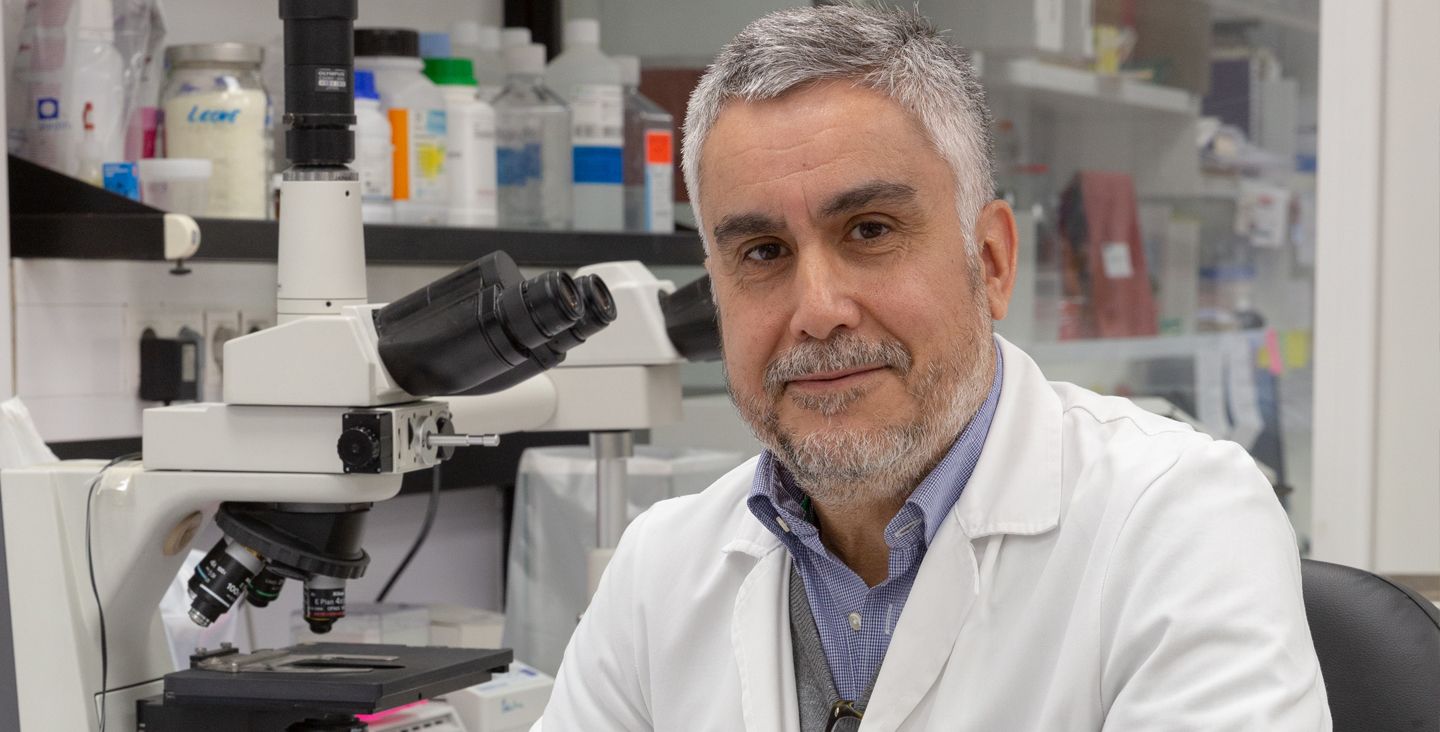
Antonio Pineda-Lucena
Head of the Medicinal Chemistry Group and Deputy Scientific Director of Cima
The awarding of the 2026 Nobel Prize in Chemistry to Henri B. Kagan and Kenso Soai recognises discoveries that shed light on how a chemical reaction can promote and amplify the formation of a specific molecular variant. Their work on non-linear effects and autocatalysis in asymmetric organic synthesis is linked to a fundamental issue in pharmacology: two molecules with the same composition can behave differently within the body.
To understand this, one need only think of our hands. They are mirror images of each other, yet they cannot be superimposed. Many molecules share this same property, known as chirality, and exist in two forms called enantiomers. The body’s proteins also have a defined three-dimensional structure and can recognise each of these forms differently. Therefore, knowing the chemical formula of a medicine is not enough: the spatial arrangement of its atoms is also important.
The chemical challenge lies in obtaining, preferably, one of these forms. Kagan demonstrated that, in certain reactions, a small difference in the enantiomeric composition of a catalyst could result in a significant difference in the product. Soai identified a reaction in which the product favoured its own formation, amplifying the predominance of one of the enantiomers. These discoveries broadened our understanding of how marked molecular asymmetry can arise, an issue relevant both to the chemistry of life and to the design of synthetic processes.
In pharmacology, the consequences of chirality can go far beyond a difference in odour. The enantiomers of a compound may exhibit different activity, be distributed or metabolised differently, and produce different adverse effects. There is no rule stating that one form is always beneficial and the other harmful. What is required is to identify both forms and study their properties before attributing safety or efficacy to a molecule.
Thalidomide is probably the best-known example. Marketed as a sedative and used during pregnancy, it caused severe congenital malformations in thousands of children. Its history is often summarised by stating that one of its forms was therapeutic and the other toxic. However, this explanation is incomplete: the two enantiomers are converted into one another within the human body. Administering only one of the forms would not, in itself, have eliminated the risk. This was demonstrated by studies analysing its behaviour in humans.
This case helps to clarify the relationship between the Nobel Prize and the development of medicines. Obtaining a specific molecular form is essential, but it is also necessary to verify what happens to it once it has been administered. Controlling the synthesis and understanding its biological behaviour are complementary processes. A chemically well-defined preparation allows its properties to be rigorously assessed; it does not, in itself, guarantee that it is a safe treatment.
Carvone and thalidomide are not direct applications of the award-winning reactions. They illustrate why the problem addressed by Kagan and Soai is important. Their discoveries show how a molecular preference can be amplified to the point where one form comes to predominate over the other. For pharmacology, understanding and controlling this asymmetry means working with greater precision on a characteristic that can determine a drug’s activity and safety. That is one of the reasons why a fundamental breakthrough in chemistry also deserves attention from the field of medicine.