
The combination of AI, synthetic biology, and data analysis will guide the development of new, optimized cancer therapies
International experts are gathering in Pamplona to present advances in the discovery of new drugs
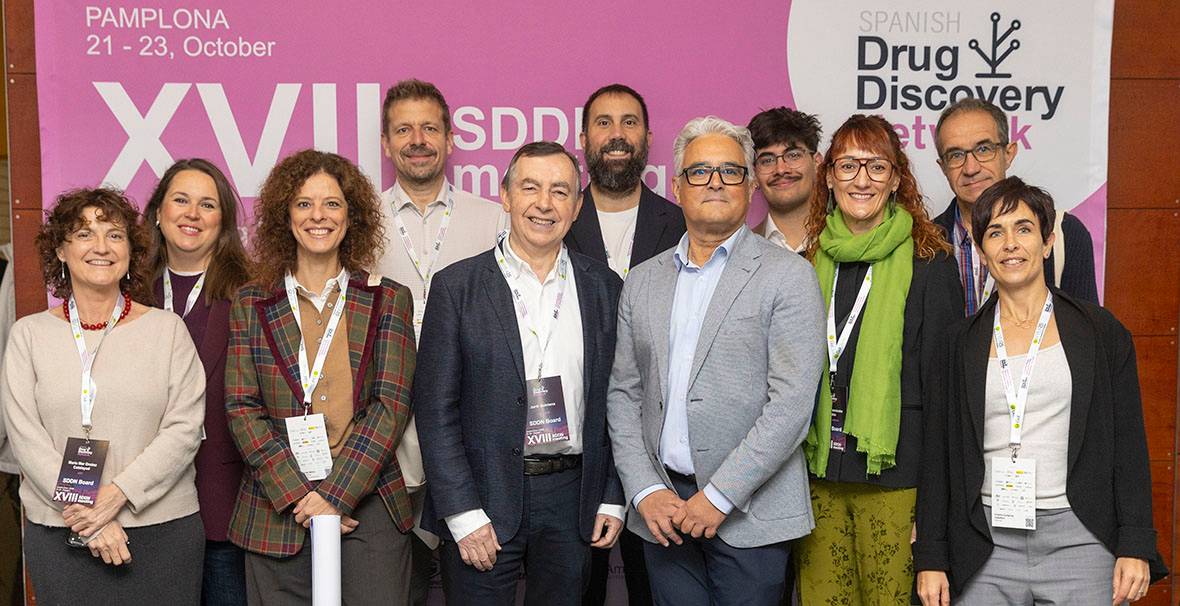
October 22, 2026
More than a hundred experts gathered this week in Pamplona to participate in the 18th meeting of the Spanish Drug Discovery Network (SDDN). “The meeting is a forum where we share advances in the development of new drugs through multidisciplinary research, with a special focus on advanced therapies and the role of artificial intelligence (AI),” explains Jordi Quintana, president of the SDDN and organizer of the meeting, in collaboration with the Navarra Health Cluster and Cima Universidad de Navarra.
One of the central themes focused on the role of AI in the development of cancer immunotherapies. “Thanks to deep learning and structural bioinformatics, AI is transforming traditional drug discovery into a discipline of precision engineering, shifting the paradigm toward highly personalized therapeutic strategies,” says Dr. Jokin Carrillo, director of the Drug Development Group at Cima Universidad de Navarra and co-organizer of the meeting.
Among the main applications, the design of personalized cancer vaccines stands out. “Computational algorithms are now essential for identifying neoantigens and creating tailored vaccines adapted to each patient’s unique mutational profile. In this regard, advances in synthetic biology will help improve current immunotherapies,” he adds.
More Effective and Safer Treatments
Experts have presented the latest developments in the field of therapeutic targets and biomarkers. “The multi-omic profile gives us an unprecedented level of detail about the biology of diseases, but advanced integration strategies are needed to derive actionable insights,” explains Leire Escudero-Ibarz, associate director at AstraZeneca.
In this context, AI and machine learning help prioritize targets by identifying evidence that aligns across different molecular layers and patient data, which will help develop more effective and safer treatments.
The biomarkers and targets identified through these strategies would also allow for better selection of which patients benefit from each treatment and reduce the time it takes for a discovery to reach the clinic. Experts agree that the ultimate goal is to improve patients’ quality of life across various therapeutic areas.